Windows in listed buildings in Lewes
Lewes parish has nine Grade I, twenty-two Grade II* and 499 Grade II listed buildings, according to the National Heritage List as summarised on Wikipedia. Many stand along the High Street, Cliffe High Street and Southover High Street, but listed houses turn up in back streets and twittens too. If yours is one, the windows are part of what is protected.
What consent covers
Listed building consent is needed for any works that would affect a listed building's character as a building of special architectural or historic interest. Replacing a sash or casement nearly always does, whether the window is at the front or the back, and whether or not planning permission is also needed. Doing the work without consent is a criminal offence, and an order to put it right stays with the building when it is sold, which is why buyers' solicitors ask about windows on listed houses.
In the town, and in Kingston, Glynde, Rodmell and Offham, the application goes to the South Downs National Park Authority. For listed buildings in Ringmer, Barcombe and most of Cooksbridge, it goes to Lewes District Council.
What Lewes listed windows look like
The windows are as varied as the buildings behind them. The Authority's conservation area appraisal notes that Georgian terraces in Lewes usually have six-over-six or eight-over-eight panes, while later villas often have two-over-two, and that bow windows are common in Georgian buildings near the High Street. Medieval timber-framed buildings more often have casements. Many High Street fronts are later skins on older buildings: the Friends of Lewes High Street walk points to Barbican House, a sixteenth-century building with an eighteenth-century front, and to Nos 199 and 200 High Street, bow-windowed houses of 1790 faced in mathematical tiles. Bartholomew House by Castlegate has black mathematical tiles.
Mathematical tiles matter for windows because, as the appraisal points out, they overclad a timber frame and lack the defined lintels of real brick. Opening up one of these walls to fit a new frame needs care that a brick wall does not.
Repair, secondary glazing, or new timber
Historic England's guidance on traditional windows, and most conservation officers, favour repair first, then sympathetic upgrades, then replacement in kind. In practice:
- Repair and draught-proofing of the existing sashes keeps the old glass and is the least intrusive change.
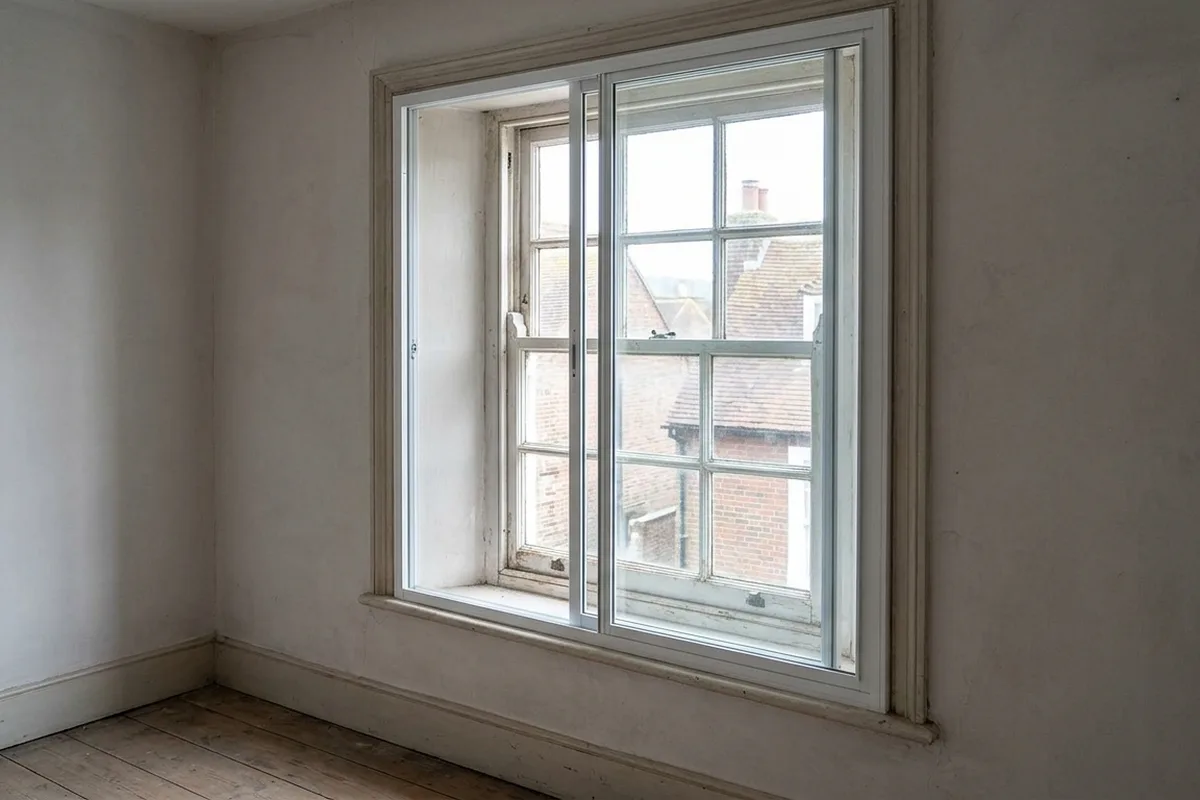
- Secondary glazing fitted inside the reveal, with its frames lined up behind the sash's meeting rail or bars where possible, is often the easiest change to get agreed. As an indicative market range, not a quote, a secondary unit for a 900 by 1800 sash opening costs about £450 to £1,200 including VAT, supplied and fitted.
- New timber sashes or casements made to the pattern of the old, where the existing ones are beyond repair. Whether slim double glazing is acceptable is decided building by building.
uPVC is very rarely accepted on a listed building, and this site will not suggest it for one.
What to send with an application
Expect to need a heritage statement, photographs of each window, a note of their condition and joinery drawings of the new frames, often with full-size or half-size sections through the glazing bars, meeting rails and sills. An installer used to listed work in Lewes will expect to produce these drawings and to wait for consent before ordering.
See a priced example on the example jobs page: four timber casements and a boarded timber door for a listed flint cottage in Rodmell.