Flush casement windows for Lewes cottages and village houses
Not every old house round Lewes had sashes. The Authority's appraisals note that medieval timber-framed buildings in the town more often have casements, and that in Kingston casements were used on the more modest buildings, sitting flush with the frame and with slim glazing bars. A flush casement copies that.
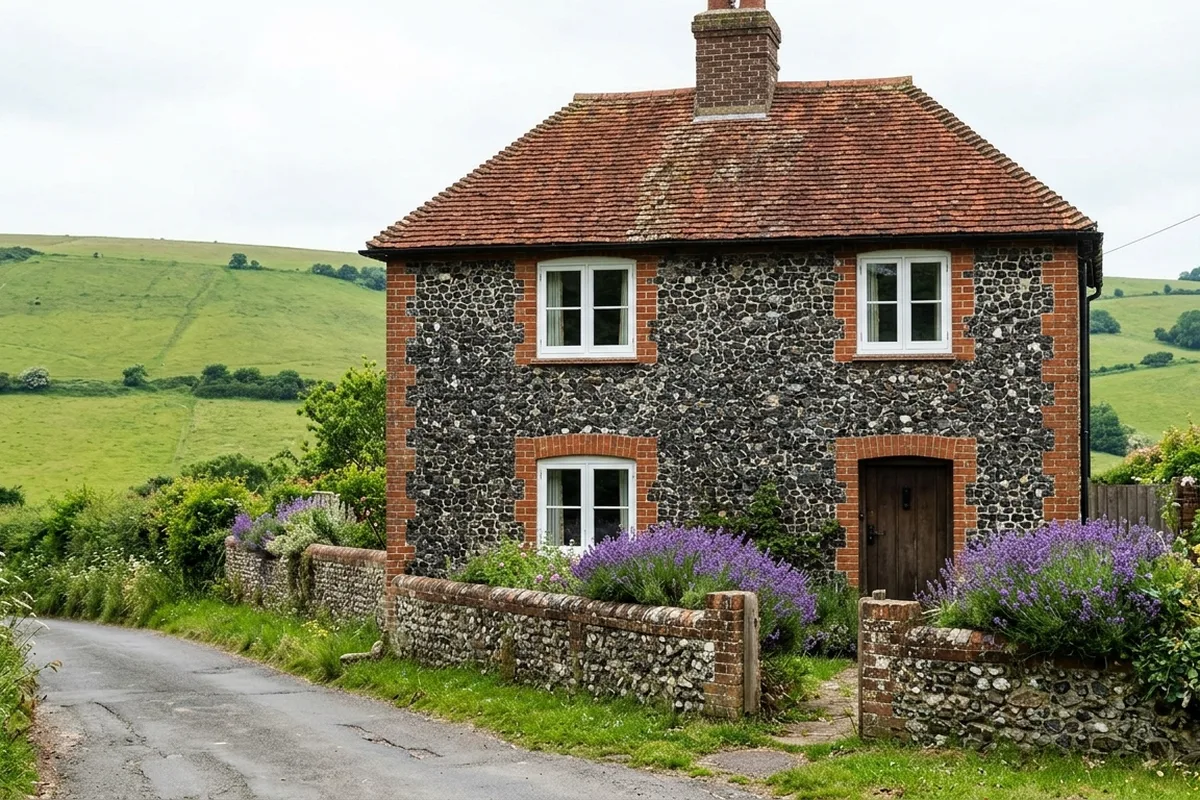
Where flush casements fit
- Flint cottages in Kingston, Glynde and Rodmell, where knapped flint with brick corners and openings is the typical wall.
- Older timber-framed buildings in Lewes that were built with casements, where the planners allow a change.
- 1920s to 1960s houses in Cooksbridge and Ringmer, where a flush casement looks closer to the original timber than a stepped casement does.
Three materials
uPVC flush casements are the usual recommendation where the house is not listed: the opening light sits flush in the frame like timber, and nothing needs painting. Aluminium flush costs about a third to a half more and gives slimmer frames. Timber flush costs roughly double the uPVC version and is the answer on a listed cottage, where consent will expect timber made to the old pattern; expect to repaint it about three years after fitting, then on a regular cycle.
Bars, sills and flint reveals
Choose bars that match the old ones in number and width. In a flint wall the reveals are rarely square, so the survey measures each opening separately, and where the old pointing is lime the fitter should make good in lime rather than cement.
Which consent applies
Kingston, Glynde and Rodmell are inside the National Park and each has a conservation area. The Authority's Article 4 register lists nothing for Kingston or Glynde, and Rodmell's entry is for The Drove, The Brooks. An unlisted cottage usually keeps its permitted development rights. Cooksbridge and Ringmer are outside the Park and come under Lewes District Council. Use the planning checker.
A priced example
Three flush casements for a 1920s cottage near Cooksbridge station. Typically £3,800 to £6,350, supplied and fitted, including VAT. See the example.