Front doors in Lewes for terraces, cottages and village houses
A front door on a Lewes terrace usually opens straight onto the pavement, which means it faces a highway. Inside the conservation area, that puts it under the Article 4 direction in the same way as the windows beside it.
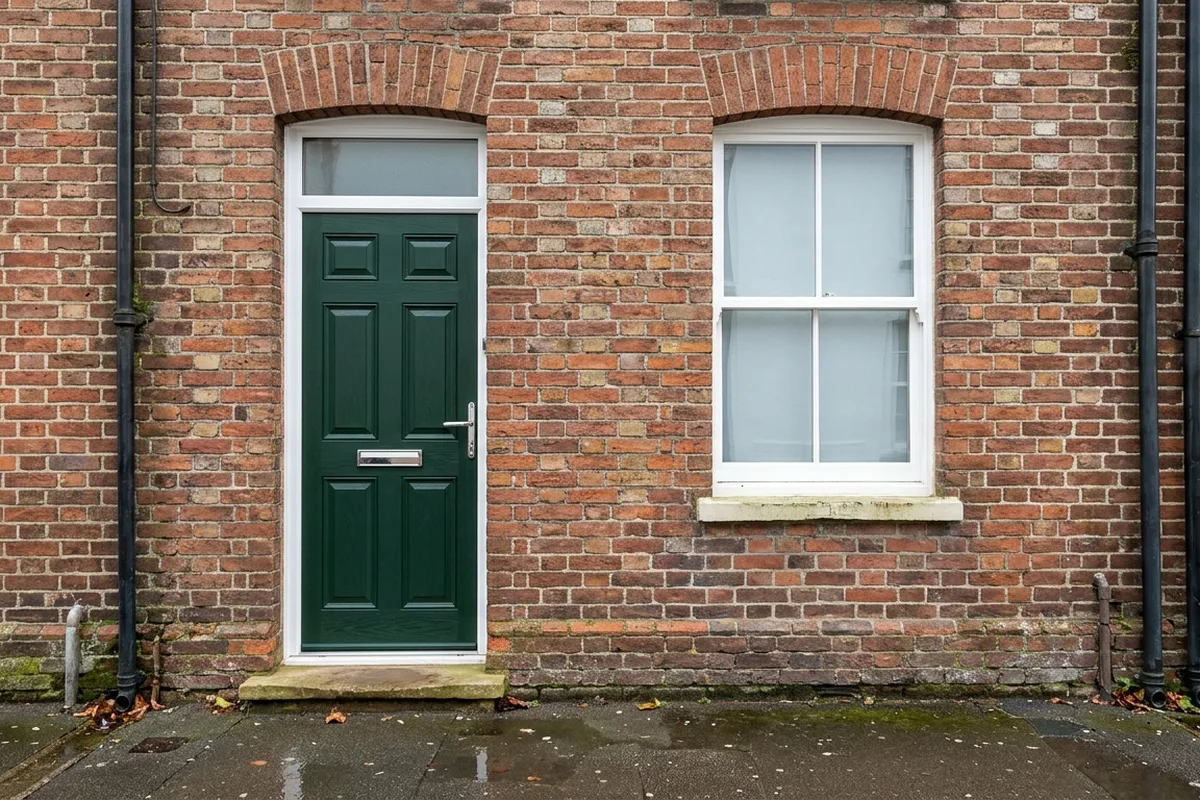
Choosing for the house
- Victorian terraces in the Cliffe, the Pells and Southover: a composite door in a four-panel pattern, with a plain fanlight where the original had one, is the closest low-maintenance match.
- Georgian fronts on and off the High Street, where a panelled door sits in a doorcase: these are usually timber jobs, and on a listed building any change needs consent.
- Village cottages in Kingston, Glynde and Rodmell: a plain boarded or simple panelled design suits, in composite where the house is not listed.
- Post-war houses in Ringmer and Cooksbridge can take any style; most owners choose composite for security and insulation.
Composite, timber or aluminium
Composite doors are the usual choice: a solid core, a skin that does not need painting, and good security. Timber doors cost more and need repainting, and are the answer where planning or listing requires timber. Aluminium entrance doors suit a modern extension better than a period front.
When a new door needs permission
In the Lewes conservation area, a new front door that looks different from the old one on a street-facing wall needs planning permission because of the Article 4 direction. A like-for-like timber door that leaves the appearance unchanged does not. On a listed building, consent is needed either way. Outside the conservation area, and in the villages, a door of similar appearance is normally permitted development. The planning checker covers doors too.
A priced example
Whole-house casements and a front door for a 1960s semi in Ringmer. Typically £7,900 to £12,400, supplied and fitted, including VAT. See the example.